
Introduction
Many kids understand formulas but hit a wall during problem-solving. This isn't because they lack "math talent"—it's because they lack structured thinking. By teaching kids Logic Gates (AND, OR, NOT), we give them a "logical map" that turns overwhelming word problems into clear, solvable puzzles.
"When kids learn logic gates, they aren't just learning how computers think. They are learning how to build a mental framework that makes math achievement 3x faster and significantly more permanent."
In this guide, we’ll explore how these simple binary rules—the building blocks of all modern technology—can transform your child's mathematical confidence and set them on a path toward lifelong problem-solving mastery.
Source: Journal of Experimental Child Psychology
Source: Google & Gallup Computer Science Report
Source: Gallup Student Poll / MIT Media Lab
1. Where Kids Actually Get Stuck

Mental barriers in mathematical reasoning
In most math problems, kids don't struggle with numbers—they struggle with the logic of the question. Without a foundation in logical reasoning, children rely on rote memorization, which fails as math becomes more complex. Logic gates provide the "binary foundation" needed to break problems into manageable parts.
Common Logic Traps
- Guesswork Patterns: Trying to guess the answer based on keywords like "total" or "difference" instead of analyzing the underlying conditions.
- Decision Fatigue: Struggling to decide which operation comes first in multi-step word problems (e.g., Should I subtract AND then multiply?).
- Sequence Failure: Failing to follow steps in the correct order, which is the mathematical equivalent of a "broken circuit" in logic gates.
2. A Different Way to Look at Math
Imagine if math was presented not as a series of numbers, but as a series of "switches." In the world of Logic Gates, every decision is either a 1 (Yes/True) or a 0 (No/False). This binary simplicity replaces the overwhelming complexity of a word problem with clear, actionable rules.
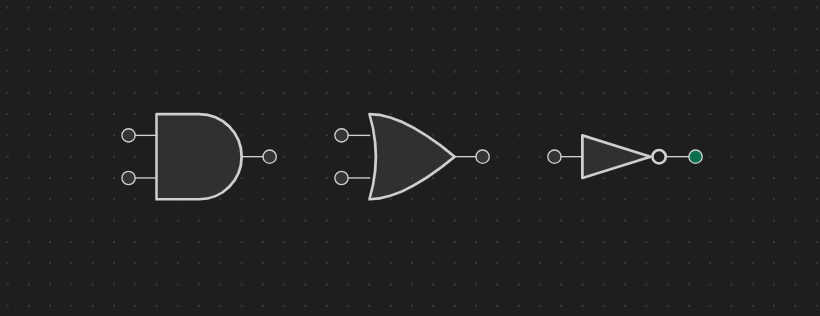
The Three Universal Pillars of Decision Making
The AND Gate (Intersection)
This happens when multiple conditions must be true at once. If a problem asks for a number that is "odd" AND "prime," the "results" switch only turns on if both boxes are checked. This teaches discipline in following all parts of a problem.
The OR Gate (Alternative)
The OR gate represents flexibility. "Is the shape a square OR a triangle?" If either condition is true, the answer is "Yes." This allows kids to understand that there are often multiple pathways or valid categories for a single answer.
The NOT Gate (Reversal)
The gate of opposites. It teaches kids to look at the complement or inverse of a situation—crucial for advanced algebra.
By mastering these simple "switches," children effectively build a mental circuit board. They stop guessing what the teacher wants and start building what the logic demands.
3. Making the Connection Simple: A Walkthrough
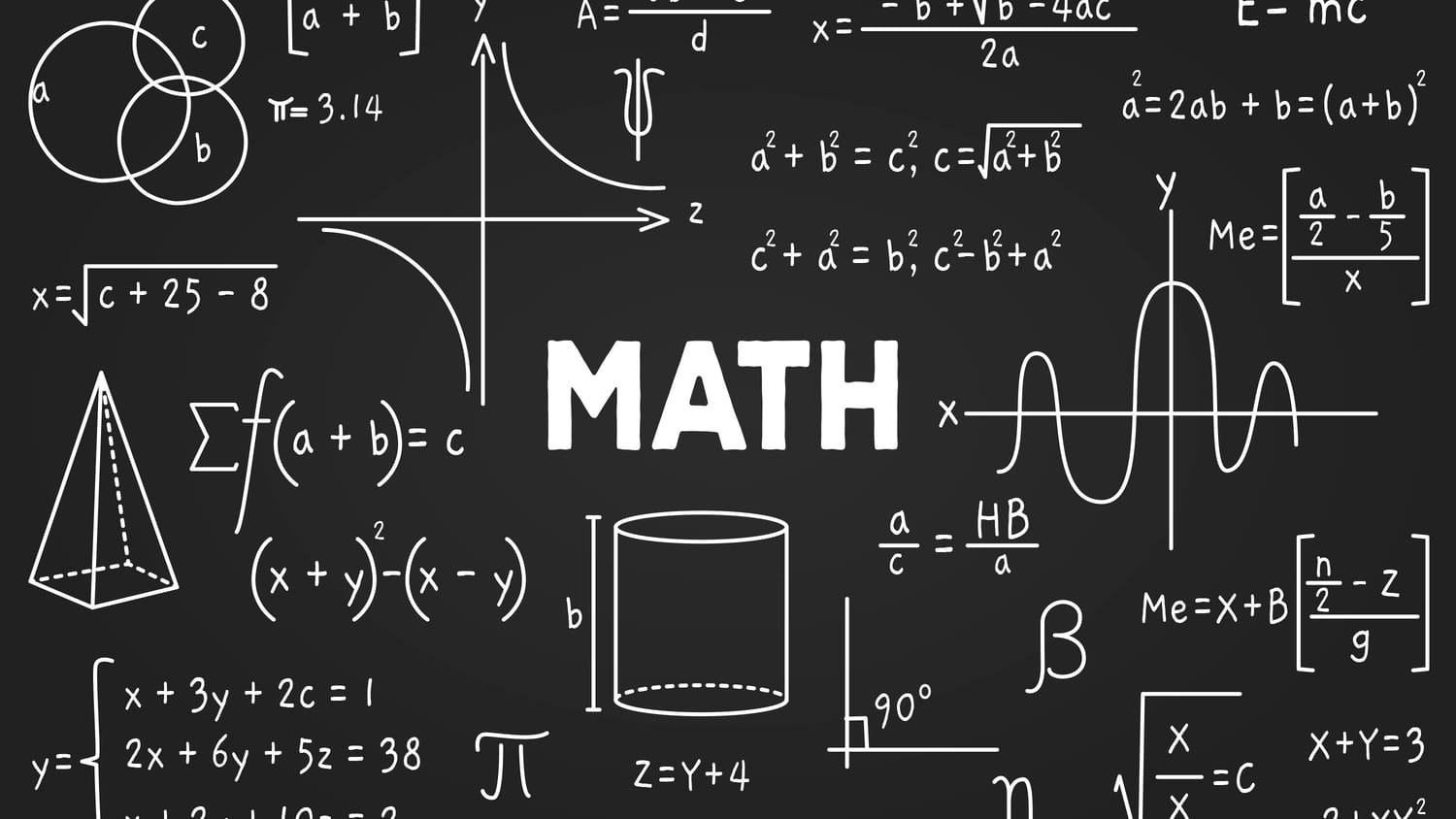
Bridging abstract logic with classroom math
Let's look at a concrete example that often causes hesitation in elementary and middle school students. Imagine a question that asks: “Identify all numbers in this set that are even AND greater than 10.”
For a child without logical training, this feels like one big, blurry task. But for a child who understands Logic Gates, this is a simple "dual-switch" operation. Here is how they break it down:
Check Condition A
"Is the number even?"
The child checks for divisibility by 2. If Yes, Switch A = 1. If No, Switch A = 0.
Check Condition B
"Is it greater than 10?"
The child compares magnitude. If Yes, Switch B = 1. If No, Switch B = 0.
Apply the AND Gate
The child knows that for the whole circuit to light up, both switches must be at 1. If even one is 0, the number is rejected.
The Result
Logic has replaced guesswork. The child isn't just "doing math"; they are executing a perfect logical algorithm.
4. What Changes in Your Child’s Thinking?
The long-term impact of logical foundations
When kids start thinking through the lens of logic gates, they don't just "get better at math"—they transform their entire cognitive approach. This skill is known as Computational Thinking, and according to reports by Google and Gallup, it is now considered by educators and students alike to be as fundamental as literacy and numeracy.
The changes we see in students are profound:
- "They stop rushing through problems and start asking: 'Wait, what are the conditions here?'"
- "They develop a high tolerance for complex tasks because they know how to break them down into 1s and 0s."
- "Their confidence in technology grows because they realize the entire digital world is built on these three gates (AND, OR, NOT)."
By breaking problems into logical parts and checking conditions step by step, math becomes less about satisfying a textbook and more about understanding the logical architecture of the world
Wrapping Up
Key Takeaways
-
01
Cognitive Transformation
Logic gates transform complex math into a series of simple, high-confidence "1s" and "0s".
-
02
Predicting Success
Longitudinal research proves that fluid reasoning (logic) is the single most significant predictor of math achievement, accounting for 90% of future success variance.
-
03
Future-Proof Skills
Learning AND, OR, and NOT gates prepares children for advanced STEM fields like AI, Software Engineering, and Data Science.
As we move into a world dominated by tech, Logic Gates will be the primary differentiator. When a child stops fearing "The Wrong Answer" and starts trusting "The Logical Process," their entire future changes.
Ready to see your child's logic come to life? belmans4kids offers specialized pathways designed to turn math frustration into technological mastery.
Created by

Trisha SS Belman
Tutor, belmans4kids
Trisha SS Belman is an 11-year-old expert Tutor at belmans4Kids, inspiring children aged 6–16 to explore the digital skills shaping the future — from math logic and game design to app development and AI. With over 5 years of experience in digital skills and more than 10,000 hours of hands-on learning and teaching experience, she brings energy, creativity, and peer-to-peer mentorship to every session.
Portfolio Link: https://trisha-ss-belman.web.app/


