
Introduction
Imagine your child doesn't just play Minecraft, Roblox, or Fortnite, but actually understands the intricate architectural logic and spatial mathematics that bring those worlds to life. As parents in the digital age, we often find ourselves caught in a constant tug-of-war with "screen time," worrying about its impact on focus and productivity. But what if that screen time wasn't just passive consumption? What if it became the bedrock of one of the most prestigious and high-paying career paths of the next decade?
Today, 3d modelling for kids has evolved from a niche artistic hobby into a fundamental pillar of digital literacy, standing alongside coding and AI as a prerequisite for the "Future of Work." Whether it is designing life-saving patient-specific medical implants, engineering the next generation of electric vehicles, or building the vast, immersive cinematic universes of tomorrow, the ability to manipulate three-dimensional space is no longer optional—it is the ultimate "power skill" for the next generation of global innovators.
When we talk about 3D skills, we aren't just talking about making "cool shapes" on a screen. We're talking about a multi-disciplinary bridge that connects geometry, physics, artistic composition, and technical engineering. In the following deep-dive, we will explore why starting this journey between the ages of 6 and 16 is the single most important investment you can make in your child's professional future, and how the "Career Perspective" of 3D skills is far broader and more lucrative than most parents realize.
"By 2030, 85% of the jobs that will exist haven't even been invented yet—but almost all of them will require the fundamental ability to create, manipulate, and integrate digital 3D assets into physical and virtual realities."
1. The Building Blocks of a Professional Career
Mastering the foundations of spatial intelligence through creative project-based learning.
The Critical Shift: From Player to Architect
The traditional school system often struggles to bridge the gap between abstract mathematics and real-world application. Geometry in a textbook feels flat; physics formulas feel distant. However, when a child enters the world of 3d modelling for kids, these concepts suddenly become tangible. They aren't just memorizing the properties of a sphere or a cube; they are manipulating them to build a character’s armor or the structural support of a futuristic bridge.
This is where the transition from a "consumer" to a "creator" begins. In our modern economy, the highest-valued individuals are those who can envision a solution in their mind and build a prototype in the digital world. By learning 3D skills early, children develop a "Digital Artisan" mindset—a rare combination of artistic sensitivity and engineering precision that is highly sought after by recruiters at top-tier tech firms, game studios, and industrial design houses.
The Professional Edge: 3 Key Competencies
-
Spatial Intelligence & Logic The ability to mentally rotate objects and understand complex 360-degree digital environments is a skill that translates directly back to robotics, architecture, and even surgical planning. It build a cognitive framework for structural thinking.
-
Resilient Iterative Design In 3D, the first version is rarely the final one. Students learn that a "failed" render or a broken mesh is simply a feedback loop. This fosters "grit"—the emotional resilience to troubleshoot, refine, and perfect a project until it meets professional standards.
-
Professional Workflow Literacy Navigating complex software like Blender or Maya isn't just about clicking buttons; it's about understanding standard industry pipelines. Children learn how to manage data, optimize files, and prepare assets for integration into other platforms—the exact tasks performed by professionals at Pixar.
As your child progresses through their digital education at Belmans4Kids, these foundational skills consolidate into a formidable competitive advantage. By the time they reach university or the job market, they aren't just "learning" 3D; they are already practitioners with years of experience in the "Creator Economy" of the future.
2. The 5-Step Roadmap to a 3D Career
The "Digital Artisan" Mindset
It starts with a single cube. In kids modelling classes at Belmans4Kids, we focus on the "why" before the "how." Why does a character need a certain shape? How does light interact with a surface?
Mastering the Mesh
This is where the magic happens. Moving from primitive shapes to complex characters. This stage builds immense focus and patience—two traits every elite employer looks for.
Breathing Life into Pixels
Careers in high-end VFX start here. Understanding materials—how metal differs from skin—is what separates a hobbyist from a professional "Technical Artist."
Each step is designed to build a professional-grade "Showreel" that speaks louder than any resume.
3. The Multi-Industry Horizon: Where 3D Works
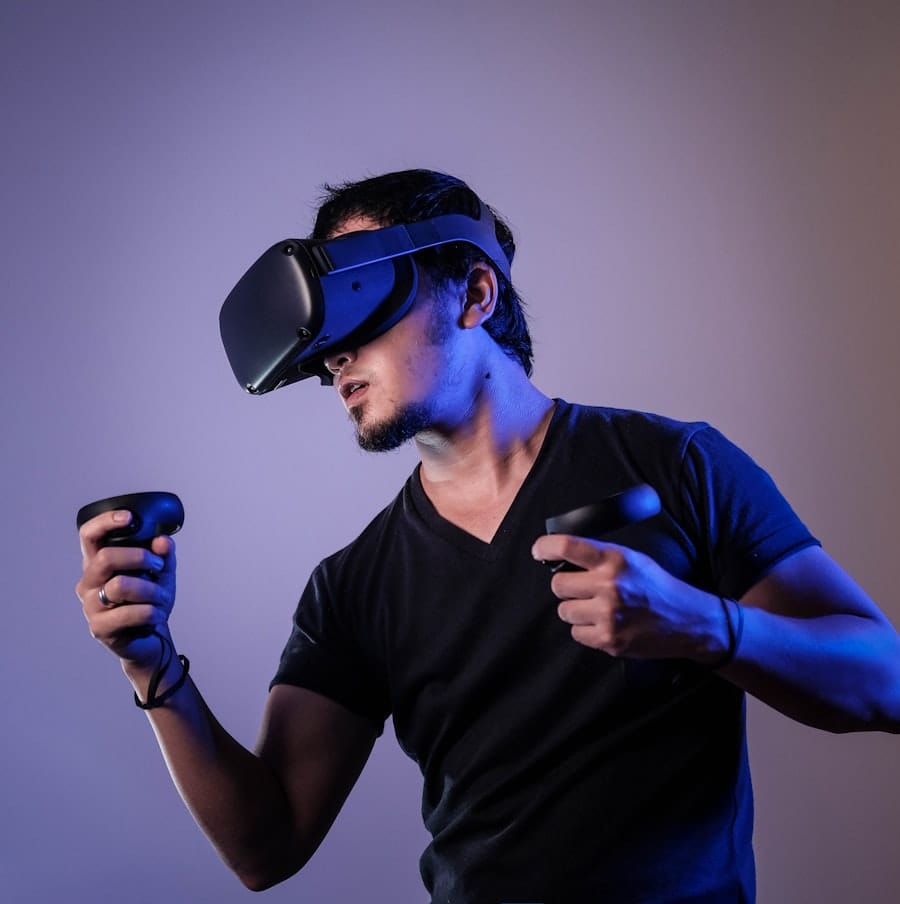
One of the biggest misconceptions parents have is that 3D skills are "only for video games." While gaming is a massive, $200-billion-plus industry, it is only the tip of the iceberg. As Artificial Intelligence advances, the role of a human **ai model maker** is transitioning from "building every triangle" to "managing complex 3D systems." Human creative oversight is more valuable than ever. 3D literacy is becoming a utility skill, much like typing was 30 years ago, but with the earning potential of high-end software development.
For instance, the future of the **semiconductor** industry relies heavily on 3D visualization to map out microscopic circuit architectures. In **robotics**, engineers use 3D environments to simulate and test how **robotic arms** will interact with patients during high-stakes surgery. Even the **automobile** industry now uses **Unity** and other 3D engines to create hyper-realistic virtual worlds where AI drivers can practice millions of miles of driving before ever touching a real road.
AAA Gaming & Hollywood VFX
This is the classic high-visibility path. From building the vast procedural worlds of The Last of Us to the CGI creatures in Marvel movies, 3D artists are the primary architects of our global cultural moments. The demand for technical artists who bridge the gap between art and code is currently at an all-time high.
Key Role: Environmental Artist / Rigging TD
Next-Gen Architecture & Urban Design
The concept of "Digital Twins"—exact 3D replicas of cities and buildings—is revolutionizing how we plan our physical world. 3D specialists are now working alongside civil engineers to walk through skyscrapers and entire smart-neighborhoods in Unreal Engine before a single brick is ever laid on site.
Key Role: BIM Manager / AEC Visualizer
Surgical Robotics & Bio-Engineering
This is the intersection of 3D and life science. 3D modelling is used to program **robotic arms** for precision surgeries. Your child could use their skills to help a doctor navigate a patient's anatomy in a 1:1 digital twin before the operation begins, ensuring maximum safety and success.
Key Role: Medical Robotics Visualizer
Automobile AI & Nano-Tech
Every self-driving car needs a virtual playground to learn. 3D artists build these "simulation environments" in tools like **Unity** to train AI. Furthermore, 3D helps visualize the microscopic complexity of **semiconductor** layouts and nano-materials used in future hardware.
Key Role: Simulation Environment Artist
The career horizon for a child starting with 3D modelling today isn't just "bright"—it is expansive. Belmans4Kids provides a structured, mentor-led pathway that helps your child identify which of these multi-billion-dollar industries resonates with their unique passions, giving them a roadmap to mastery before they even finish school.
Closing Opinion: The "Golden Window" for Growth

As we conclude our exploration of the career perspective of 3D skills, it's important to recognize the concept of the "Golden Window." Between the ages of 6 and 16, children’s brains possess a level of neuroplasticity that allows them to absorb complex spatial logic and software mechanics almost semi-consciously—much like learning a primary language. Once this window closes in late adolescence, the "learning curve" for such complex tools becomes exponentially steeper. By giving your child access to 3d modelling for kids now, you are effectively giving them a 10-year head start on their peers with significantly less effort than if they decided to learn as an adult.
Final Career Takeaways
-
01
3D Skills are Truly Industry-Agnostic
Whether your child dreams of being a surgeon, an engineer, or a game dev, the ability to build and manipulate 3D space is a universal "force multiplier" for their career potential.
-
02
Digital Portfolios Outweigh Traditional Degrees
In the "New Economy," showing what you have built is far more valuable than showing where you went to school. A professional 3D showreel is the ultimate credential in a global, merit-based market.
-
03
Securing Future Resilience Against AI
While AI will automate simple tasks, high-level 3D spatial reasoning and human artistic oversight are some of the most "automation-resistant" skills a parent can cultivate in their child today.
The world of 2030 and beyond will be built by those who understand the digital fabric of our reality. By fostering 3D skills now, you aren't just giving your child a "hobby" to occupy their time; you are handing them the keys to the most dynamic, profitable, and meaningful career paths of our lifetime. The "Professional Career Perspective" has never been clearer—the future is three-dimensional.
"Don't wait for your child to find their passion—give them the tools to BUILD it."
If you're ready to see your child's imagination come to life and set them on a path toward a truly future-proof career, Belmans4Kids offers an online enrolment — a perfect, mentor-supported, and risk-free way to start!
Expert Author

Kshithij Anand Belman
Tutor, Belmans4Kids
Kshithij is an expert Tutor at Belmans4Kids, giving every child aged 6–16 access to the digital skills that will shape tomorrow. He's passionate about making 3D modelling and coding fun, accessible, and empowering for young learners across India, UAE, and Europe.
View Portfolio


